Give a Print Its Setting
The final stage of printmaking is the space it inhabits: cotton paper textures, acid-free window mounting, solid timber framing, and warm-temperature lighting.
Honoring the Paper Substrate
A botanical print is a three-dimensional tactile object, not a flat digital image behind plastic. When commissioning or producing prints, paper selection carries equal weight with ink quality. For warm botanical studies featuring mangoes, bright bleached white sheets look artificial and harsh.
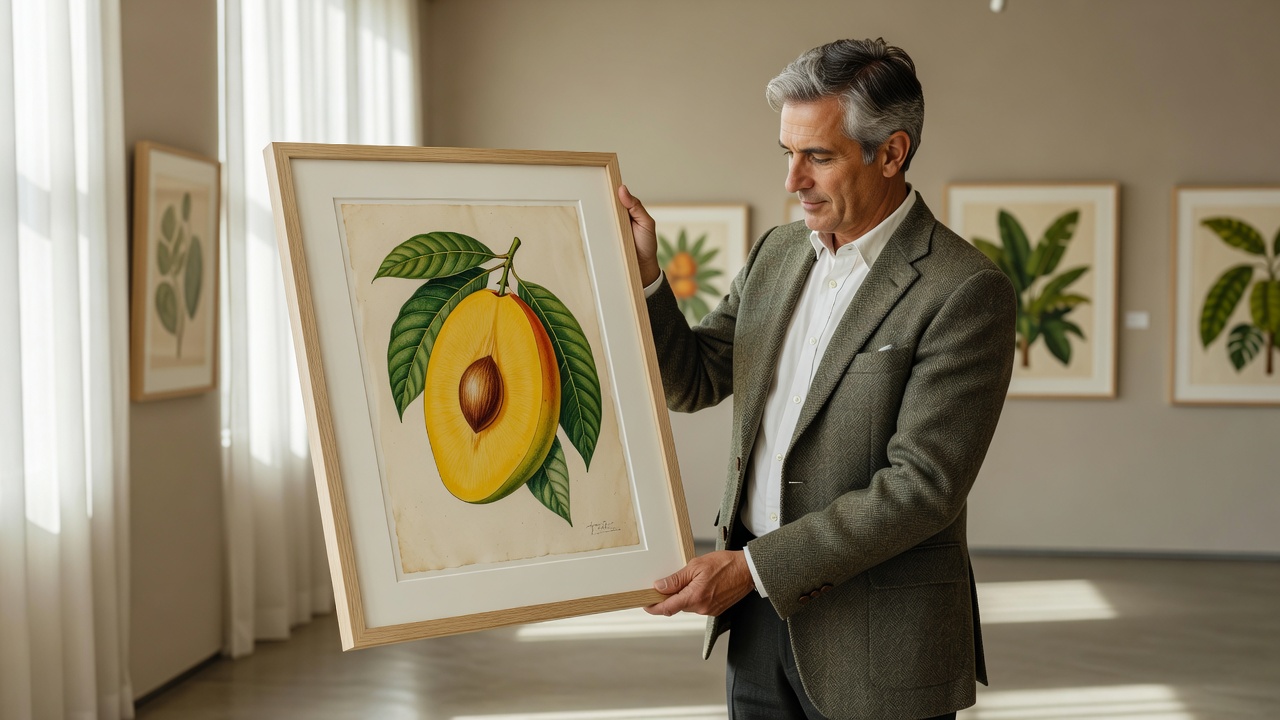
Opt instead for warm natural cotton rag stocks (such as Hahnemühle Photo Rag 308 gsm or Somerset Velvet 300 gsm). These unbleached substrates provide a subtle parchment undertone that gently supports cadmium ambers, leaf viridians, and deep umber contours.
“A print mounted against stark optic white will always look cold. Warm parchment mounts allow the yellow pigments of the fruit to glow.”
— Workshop Guidelines on Print CurationMoulding Selection: Timber vs. Metal
When selecting moulding profiles to house mango art, consider the organic character of the fruit:
- Smoked English Oak: Dense and quiet, dark oak frames create a solid architectural perimeter that complements dark forest studio walls.
- Oiled Natural Ash: Its pale, warm grain matches the lighter values of unpeeled mango flesh and provides a breezy, contemporary gallery look.
- Unlacquered Brass Fillet: For luxury editorial interiors, a thin 5mm patinated brass fillet placed inside the timber spacer catches gentle ambient light without overpowering the artwork.
Archival Mounting Checklist
1. Pure Cotton Museum Board (4-ply or 8-ply)
Ensure 100% alpha-cellulose or cotton rag board, free from lignin and acid, with a subtle bevel cut that exposes the warm core.
2. Japanese Mulberry Paper T-Hinges
Never tape down all four corners. Suspend the print from the top using reversible wheat starch paste so the paper can expand and contract naturally with seasonal humidity.
3. UV-Filtering Museum Glazing
Specify 99% UV-blocking anti-reflective glass. This prevents cadmium reds and delicate watercolor yellows from fading under daylight exposure.
Illuminating Warm Hues
Lighting determines whether your print appears radiant or sluggish. Cool LED light fixtures (5000K+) distort warm pigments, making ripe mangoes appear synthetic and muddying deep olive leaves.
Position prints under warm, high-CRI illumination (2700K to 3000K with CRI > 95). At this color temperature, the saffron and ochre glazes resonate at their intended frequency, infusing your room with the sunny warmth of the orchard.